Head lice? Don’t panic!
It’s back-to-school time! If your children go to daycare or school, you probably fall into one of these two categories:
families who’ve already had to deal with head lice…
and those who will have to deal with them someday! 😅
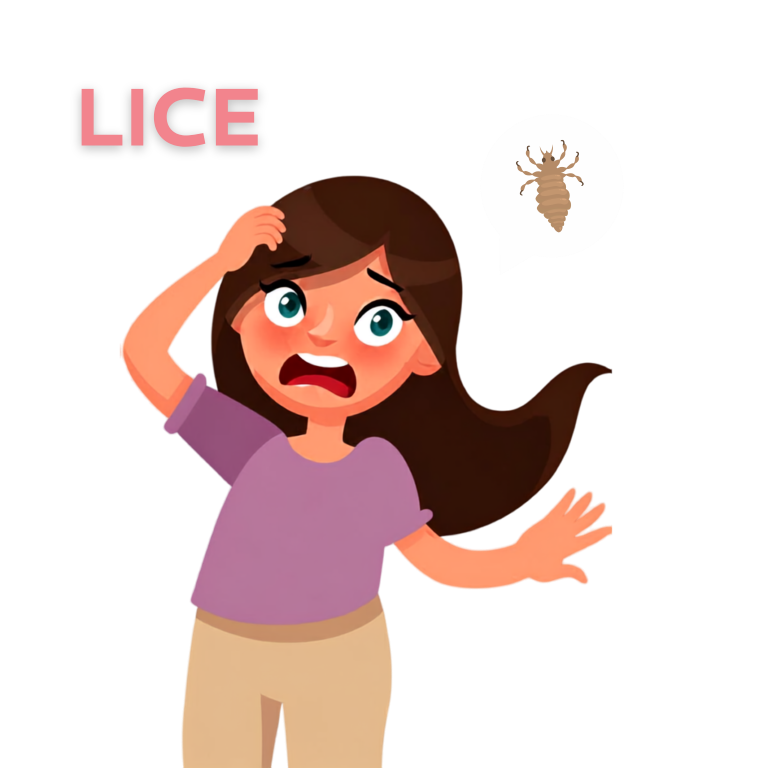
First and foremost, let’s remember this: having lice has absolutely nothing to do with cleanliness. Lice can affect any family and spread very easily among children.

How do you get lice?
The first thing to know: lice don’t fly or jump!
They are mainly spread through direct head-to-head contact, such as hair-to-hair contact. They can also be spread by sharing certain personal items, such as caps, hats, combs, brushes, or hair accessories.
That is why head lice are particularly common among young children, who tend to be in close contact with one another and share their personal belongings.
How can you tell if your child has head lice?
The main sign: your child scratches their head a lot. But the itching isn’t always present at first.
If you’re not sure, you can check for yourself. Wet the hair and use a fine-toothed lice comb, carefully running it through the hair close to the scalp. Then examine the comb for lice or nits (eggs).


What should you do if you find lice at home?
No need to rush to the emergency room! Your pharmacist can advise you and, depending on the situation, prescribe a treatment for lice.
The treatment usually involves applying a product to the hair, followed by thorough combing with a lice comb. It is important to follow the product’s instructions and repeat the treatment about a week later, if necessary.
Also be sure to check other family members and wash any personal items that have come into contact with the hair: pillowcases, towels, brushes, and accessories.
A word from Dr. LeBlanc
Head lice are unpleasant, but they’re very common and usually not a serious problem. The most important thing is to stay calm, follow the treatment steps carefully, and avoid making your child—or yourself—feel guilty!
Did you know that we offer pediatric health checkups?
A pediatric health checkup consists of a comprehensive evaluation of your child’s physical condition to ensure their healthy development. Among other things, it helps detect any diseases or asymptomatic problems. It’s also the perfect time to get advice from our healthcare professionals on your child’s nutrition, safety, hygiene, and mental health.
It is recommended that you follow the immunization schedule and have your child’s health checked at 1, 2, 4, 6, 9, 12, 18, and 24 months. After that, unless otherwise advised by your doctor, a checkup is recommended once a year.
Contact us to schedule an appointment.
– Dr. LeBlanc, Owner of the LeBlanc + Savaria clinic in Tremblant